Skill Lifecycle
What it is
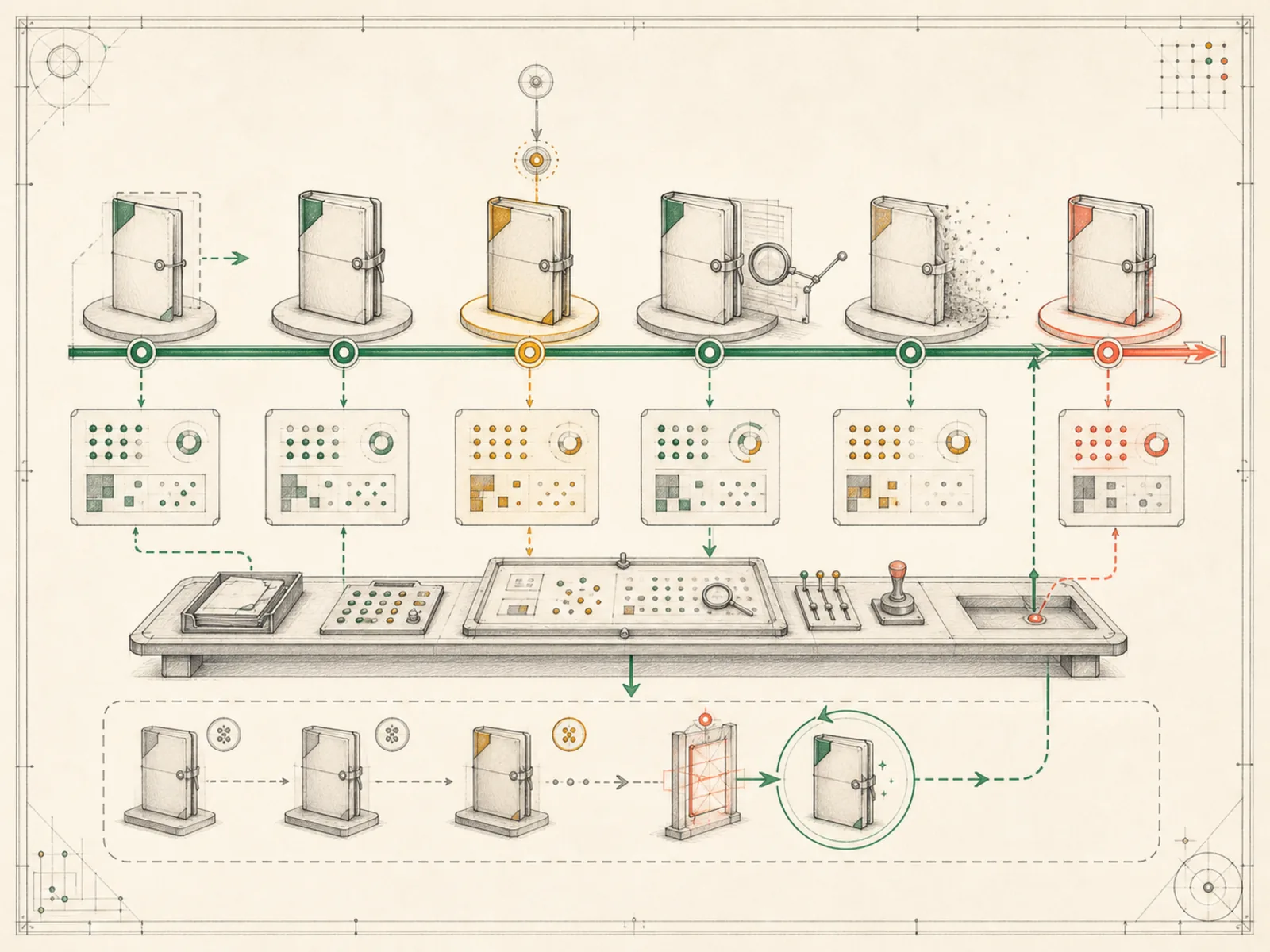
The curator-managed loop of drafting, using, refining, aging, and explicitly restoring eligible skills.
In plain terms
Think of a gardener’s journal entry started the first time an unfamiliar pest shows up in the beds — rough notes at first, refined over the next few seasons it recurs, and eventually left unopened once that pest stops showing up at all. A Hermes skill goes through the same arc: written once, sharpened by repeated use, then quietly retired once nobody needs it anymore.
Why it matters
A skill drafted for one use case rarely stays correct forever without going through the rest of its lifecycle — tested against a real task, used repeatedly, then refined once its gaps actually show up in practice. Skip the refine step and skill rot sets in quietly: a procedure that worked initially stops matching how the agent is actually being used, with no obvious signal until it fails. Self-improving skills are essentially this lifecycle running continuously rather than as a one-time authoring pass.
How it works
apply_automatic_transitions in agent/curator.py examines curator-managed skills, not every installed skill. It uses persisted activity telemetry and configurable stale/archive windows (30 and 90 days by default), skips pinned or cron-referenced skills, and marks eligible active skills stale or archives them into a recoverable folder. If a stale skill is used again, the activity timestamp changes immediately but the state returns to active only on the next curator pass. Archived skills require an explicit curator restore; ordinary use does not silently move them back.
A concrete example
Hermes creates a Kubernetes rollout skill that is eligible for curator management.
- A later curator pass sees no recent use and marks it stale after the configured stale window.
- Reusing it updates activity; it returns to active only when a subsequent curator pass processes that new activity.
- If a later pass archives it after the longer inactivity window, use alone does not restore it — the user must explicitly run the curator restore action.
How it connects
This note belongs to the Skills family. Its closest neighboring concepts are: Skill Discovery, Skill Config Variables, Agent Runtime, Personal OS.
Source evidence
vendor/hermes-agent/agent/skill_utils.py#<file>— Structural Source Map fallback for agent/skill_utils.py. A core source file in the Skill Discovery and Invocation structure within Skills and Plugins.
Workflows
- No first-pass workflow mapping yet; this concept still appears in the vault graph through articles and source evidence.
Related articles
- No article currently mentions this concept by name/alias often enough to qualify (see mention-mining policy).