Browser Tools
What it is
Navigation, clicking, typing, scrolling, snapshots, and browser automation capabilities.
In plain terms
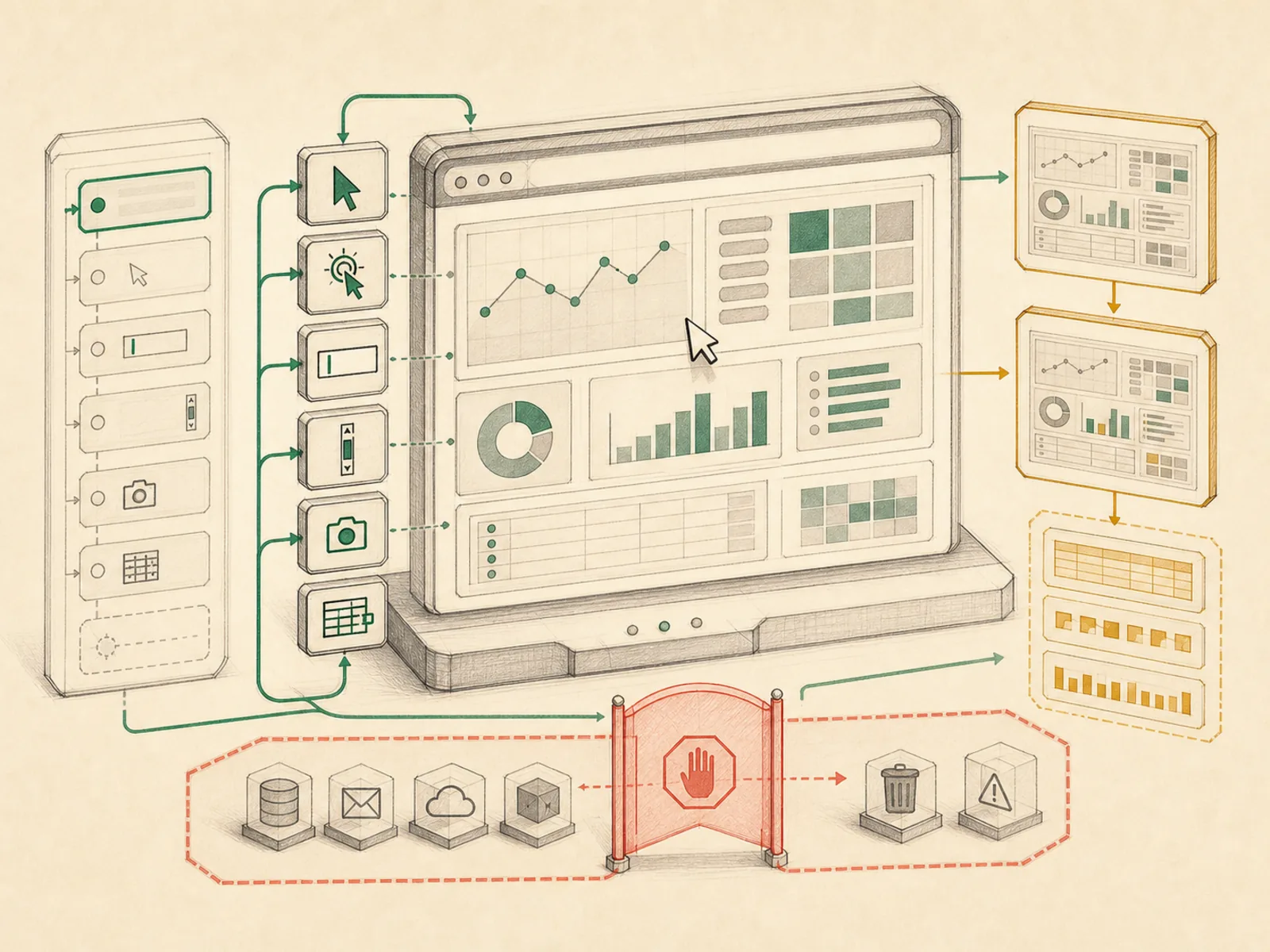
Some websites simply don’t expose an API — the only door in is the same page a visitor would load in a browser. Browser tools let Hermes work that page directly: opening it, clicking through menus, filling in fields, and checking a fresh screenshot after each step, the same sequence a person would follow if asked to check the site by hand.
Why it matters
10 registered actions — navigate, click, type, scroll, and related snapshot and interaction calls — give the agent a way to automate sites that don’t expose an API at all. That’s what turns a task like ‘check this dashboard and summarize what changed’ from a manual chore into something a cron job or subagent can execute unattended. Being one of the largest single toolsets by registration count also makes it one of the pricier ones to leave enabled by default in a cost-conscious deployment.
How it works
The browser toolset bundles ten registered actions — navigate, snapshot, click, type, scroll, back, press, get_images, vision, console, plus a shared web_search — all backed by an external agent-browser CLI (tools/browser_tool.py). Before any of these tools are advertised to the model, check_browser_requirements() runs: it accepts a local Chromium install, a CDP connection to an already-running browser, a lightweight Camofox backend, or a configured cloud provider like Browserbase, Browser Use, or Firecrawl, each satisfying the check differently. Because none of these probes require network calls to run, the check stays cheap enough to run on every schema build.
A concrete example
A user asks Hermes to check a dashboard site that has no export or API.
- Hermes calls
browser_navigateto load the page. - It calls
browser_snapshotto see the current layout, thenbrowser_clickandbrowser_typeto interact with filters exactly as a person would. - It reports back what changed since the last check — something only possible because the browser toolset can operate the page directly on a site it can’t otherwise query programmatically.
How it connects
This note belongs to the Tools family. Its closest neighboring concepts are: Configurable Toolsets, File Tools, Agent Runtime, Personal OS.
Source evidence
vendor/hermes-agent/toolsets.py#<file>— Structural Source Map fallback for toolsets.py. A core source file in the Tool Registry and Toolsets structure within Tools, Toolsets, and MCP.
Workflows
- No first-pass workflow mapping yet; this concept still appears in the vault graph through articles and source evidence.
Related articles
- No article currently mentions this concept by name/alias often enough to qualify (see mention-mining policy).