來源證據
這是什麼
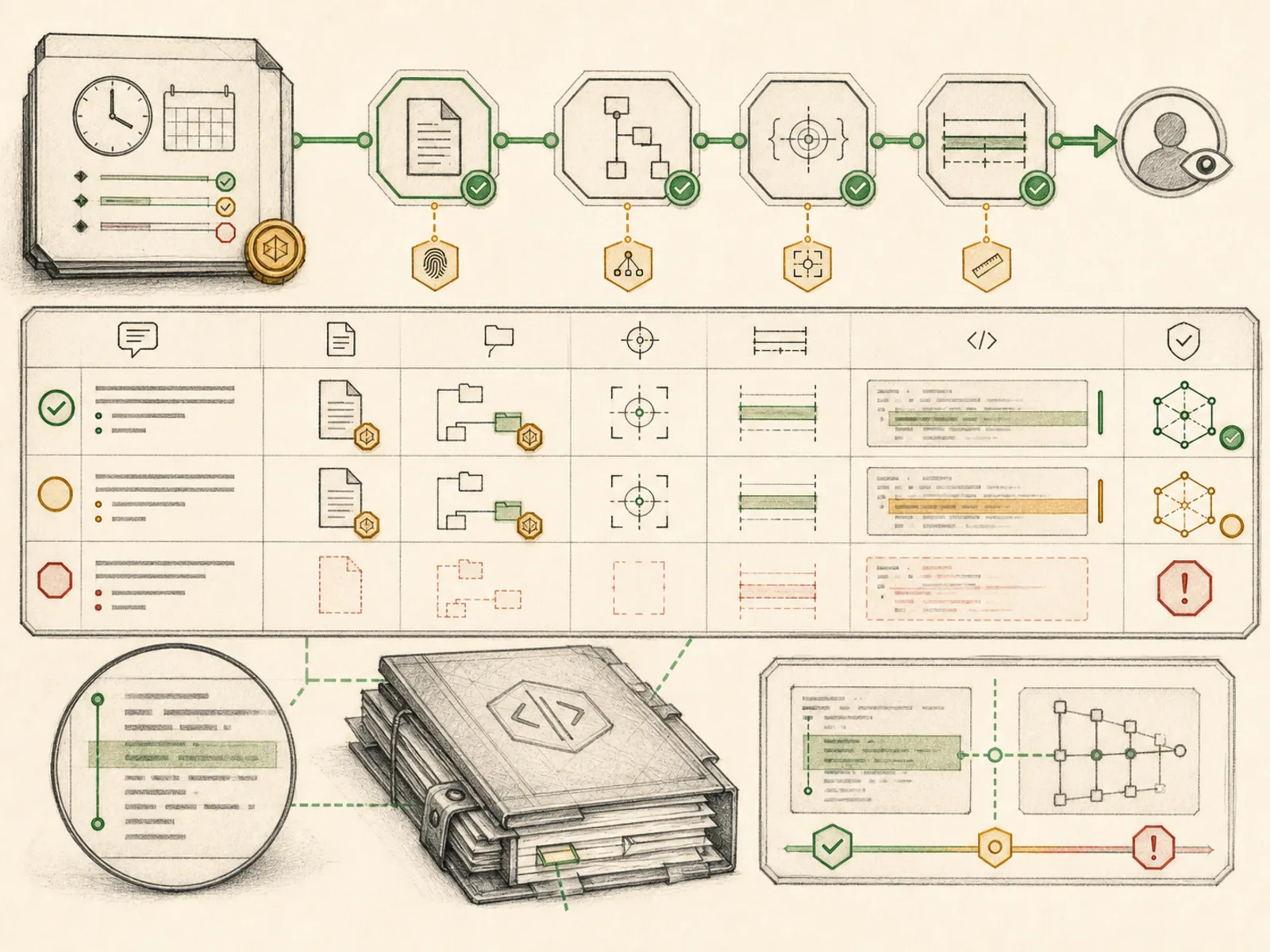
要求重要主張能追溯到原始碼、庫存節點、文章或對話記錄的查核原則。
白話解釋
稽核人員不會只聽經理說帳目沒問題,而會調出實際分類帳逐筆核對。這個文件專案也以同樣方式看待 Hermes:描述代理行為時,應指向能證明它的檔案、路由或對話記錄,而不能只重述某次聊天回覆聲稱發生的事。
為什麼重要
一項函式行為的主張,只有在能對照實際程式碼時才有價值。來源證據要求關於 Hermes 行為的重要主張追溯到原始碼檔案、庫存項目、文章或對話記錄,而不是建立在假設上。這對本知識庫尤其重要,因為無法驗證的陳述與猜測沒有差別。研究簡報流程也把同樣紀律延伸到外部資料:由原始來源製作簡報時保留引用,不把結論包裝成憑空出現的資訊。
運作方式
代理執行環境會由 run_agent.py 把每一輪保存到 SQLite 工作階段儲存區,作為正式記錄;也可選擇另寫每個工作階段一份原始 JSON 快照 ~/.hermes/sessions/session_{id}.json,供外部工具直接讀取。另一項設定則可把完整對話軌跡輸出到 trajectory_samples.jsonl 或 failed_trajectories.jsonl。只有選用的 JSON 快照會在寫入前通過 redact_sensitive_text;正式 SQLite 儲存區與對話軌跡檔案沒有呼叫這項遮蔽程序,因此若憑證已洩漏進訊息或工具呼叫的承載資料,會以未遮蔽形式保存。由於訊息和工具呼叫會落在這些持久記錄中,而不是只存在聊天視窗,便能直接查核 Hermes 的實際行為;但直接讀取原始 SQLite 或對話軌跡檔案的人,必須把它們視為可能含有未遮蔽機密的敏感資料。
具體範例
有人想確認昨晚某次 cron 執行是否真的呼叫特定工具,而不是只相信代理自己的摘要。他直接查詢 SQLite 儲存區;若當時啟用了工作階段快照,也可開啟對應的 session_{id}.json,其中憑證已在寫入前遮蔽。記錄會依序顯示確切訊息與工具呼叫,讓審查者直接核對;研究簡報流程也採用相同原則,讓每項結論保留所依據的來源引用。
如何連結
「來源證據」屬於「營運」系列。最直接相關的概念包括:「機密處理」、「VPS 部署」、「代理執行環境」、「個人作業系統」。這些連結描述教學關係,不取代來源證據。
來源證據
run_agent.py#run_agent.AIAgent— 已驗證的精確符號對應;此錨點已對照釘選 commit。