Local Deployment
What it is
Running Hermes on the user’s own machine for local development and tighter data control; model traffic still follows the configured provider.
In plain terms
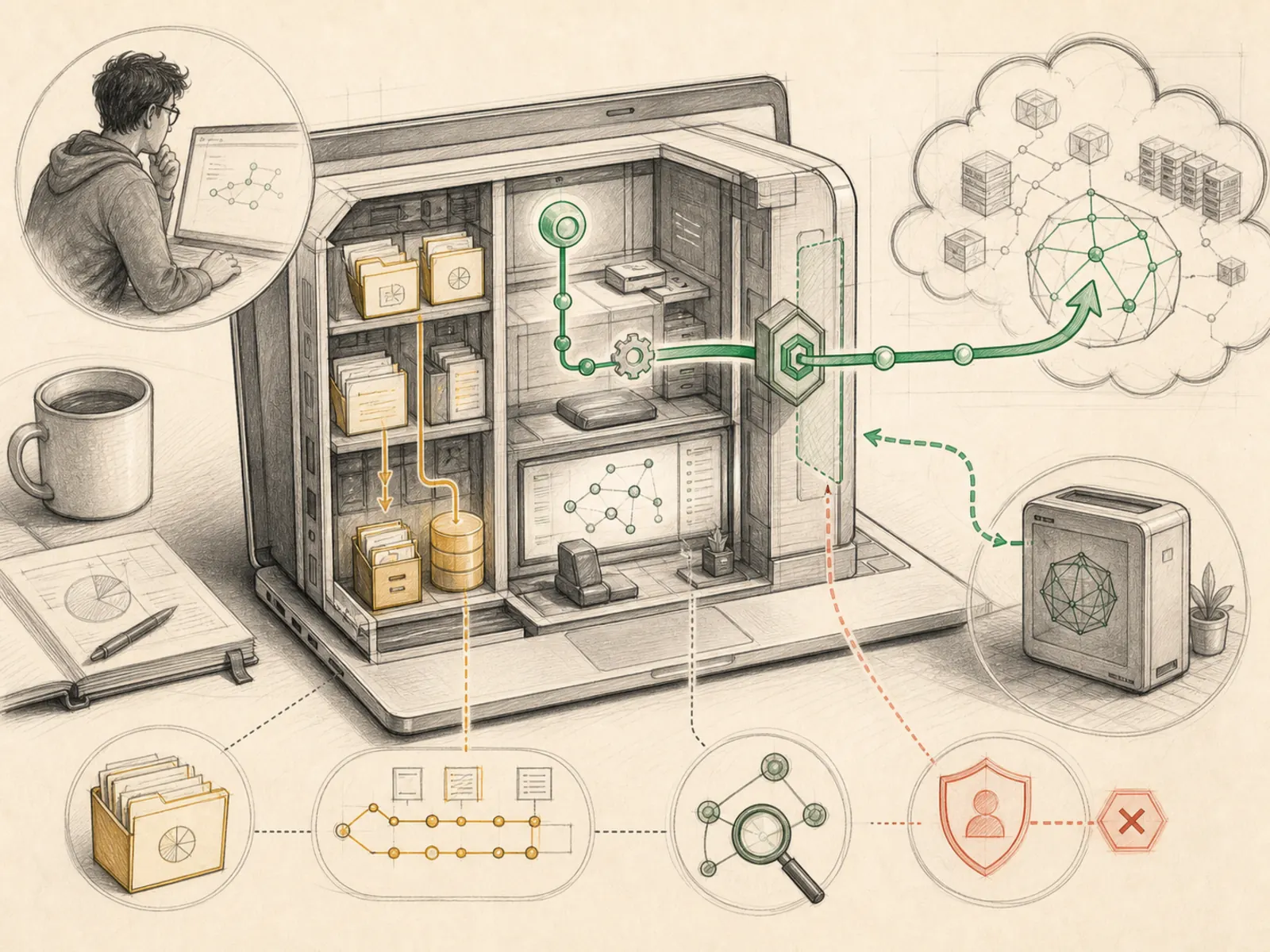
Picture keeping your files in a locked drawer at home instead of storing them in a shared filing cabinet downtown: local deployment means Hermes runs on hardware you’re physically sitting at, so files, commands, and conversations never have to leave the building unless you point a message at an outside model provider.
Why it matters
Local deployment keeps the Hermes runtime, local files, and built-in memory on hardware the user controls, but it does not by itself keep model prompts local. Whether a request leaves the machine depends on the selected provider. Pairing the local runtime with a local model closes that separate network boundary; choosing a hosted provider deliberately keeps only the runtime local.
How it works
When Hermes uses the local execution backend, shell commands and file operations run as subprocesses on the user’s machine and carry forward session state such as working directory and environment (tools/environments/local.py). That backend shares an interface with Docker, SSH, Modal, and Daytona, so execution location is a backend choice. Model requests are a separate boundary: a hosted provider still receives prompts over the network, while a configured local model can keep that traffic on the machine. Local installs may run interactively or install a gateway service, so ‘local’ describes where Hermes runs, not whether the process survives a terminal window.
A concrete example
You install Hermes on your own laptop for a personal budgeting project.
- You run
hermes chatinside the project folder. - You ask it to reorganize a batch of spreadsheet exports.
- It reads and rewrites the files directly on your drive through the local terminal backend.
- Nothing leaves the machine except the model call itself, and the session ends the moment you close the terminal, with no VPS or background service ever installed.
How it connects
This note belongs to the Operations family. Its closest neighboring concepts are: VPS Deployment, Model Providers, Agent Runtime, Personal OS.
Source evidence
vendor/hermes-agent/run_agent.py:1892-1902#AIAgent._flush_messages_to_session_db— Verified Source Map evidence for AIAgent. AIAgent uses thin forwarding methods to delegate system-prompt construction toagent.system_prompt.build_system_prompt, API kwargs construction to the chat-completion helper, and streaming requests tointerruptible_streaming_api_call.
Workflows
- No first-pass workflow mapping yet; this concept still appears in the vault graph through articles and source evidence.
Related articles
- How to Use Hermes Better Than Most People: Architecture, Project Isolation, and Scalable Workflows