Skills
What it is
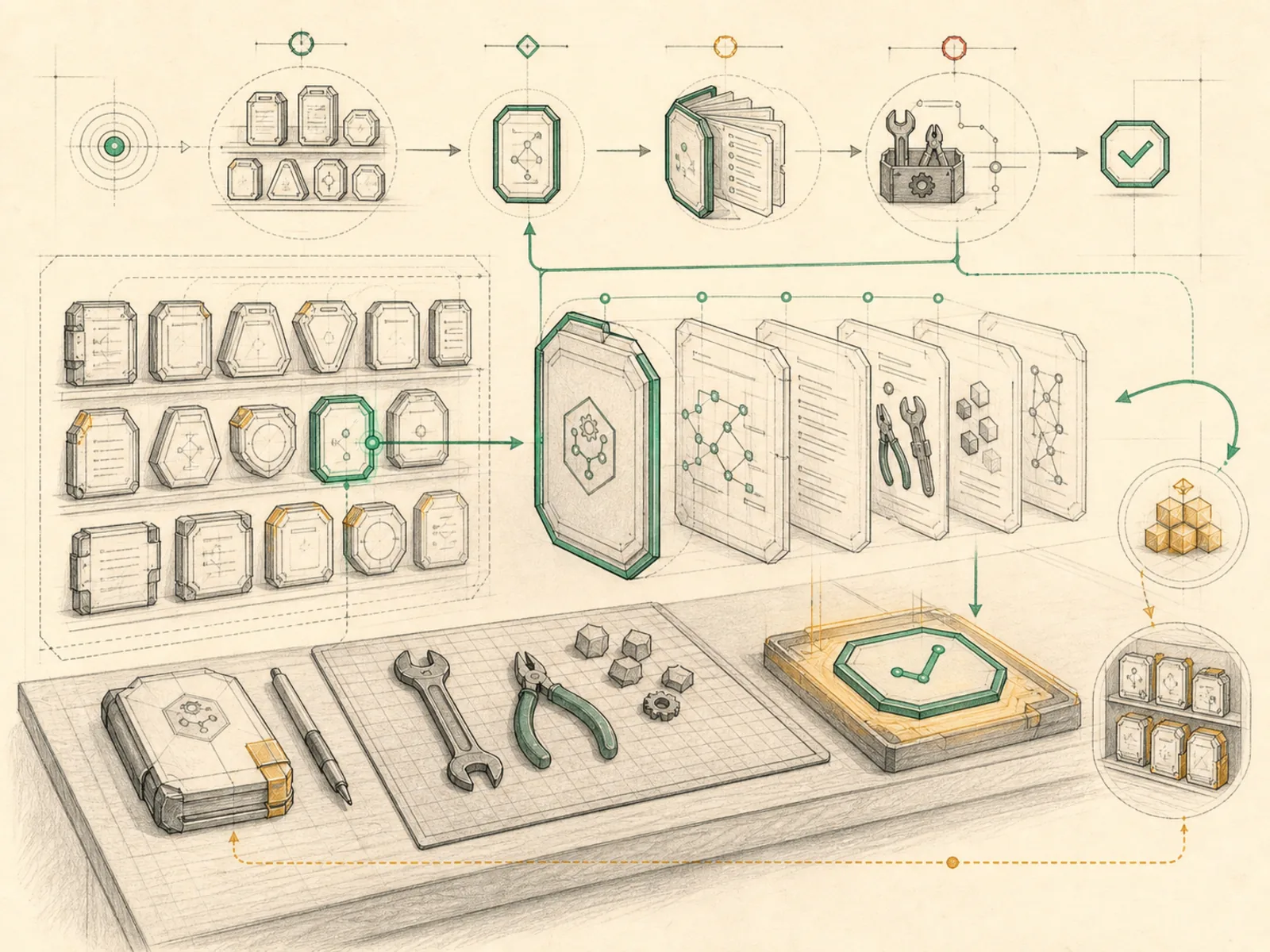
Packaged working knowledge that lets Hermes repeat a process without rediscovering it each time.
In plain terms
Think of a session musician who has already worked out how to play a particular song: next time that song comes up, they don’t improvise the part from scratch, they just play the arrangement they already found. A Hermes skill is that same worked-out arrangement: a saved procedure for one recurring kind of job — posting to Slack, editing a video, wiring up a CRM — that the agent pulls out only when a request actually matches it, instead of improvising the steps fresh every single time.
Why it matters
Rather than reconstructing a working procedure from scratch on every run, a skill packages the steps, conventions, and gotchas for a recurring task so the agent can just execute it. With 102 optional and 72 built-in skills already in the source tree, most common workflows — business CRM intake through content repurposing — are already backed by a skill rather than improvised each time. That’s what makes Hermes closer to reusable infrastructure than a chat window: the useful part of a good session can be captured and handed forward to the next one.
How it works
Every skill is a SKILL.md file with a short YAML header (name, description, optional tags) followed by numbered steps, stored under ~/.hermes/skills/ alongside built-in, hub-installed, and agent-created siblings. Each one is automatically wired up as its own slash command, so typing /github-pr-workflow loads that file’s instructions straight into the conversation. When Hermes solves a genuinely new problem — five-plus tool calls, a dead end it worked around, a correction you gave it — it can write a fresh SKILL.md itself through the skill_manage tool (tools/skill_manager_tool.py), using create, patch, or edit actions. Before any of this reaches a session, agent/skill_utils.py reads each file’s frontmatter and decides whether it’s eligible to be offered at all.
A concrete example
You type /github-pr-workflow open a PR for the auth fix. Hermes loads that skill’s SKILL.md — steps for branching, committing, and opening the PR with a templated description, plus optional moves like tagging reviewers or watching CI — then runs them against your actual repository rather than guessing generic git commands from scratch. Because the skill spells out the same branch-naming pattern, commit format, and PR structure every time, the result follows a consistent process, not just on the occasions Hermes happens to remember the details from an earlier conversation.
How it connects
This note belongs to the Skills family. Its closest neighboring concepts are: Hooks, Skill Discovery, Agent Runtime, Personal OS.
Source evidence
vendor/hermes-agent/agent/skill_utils.py#<file>— Structural Source Map fallback for agent/skill_utils.py. A core source file in the Skill Discovery and Invocation structure within Skills and Plugins.
Workflows
- Business CRM Intake
- Research Briefing Loop
- Content Repurposing Station
Related articles
- Hermes Agent Explained: Why an Agent Harness Matters More Than Another Chat Window
- Why Hermes Feels Different: Memory, Self-Improving Skills, and an Agent That Keeps Working
- How to Use Hermes Better Than Most People: Architecture, Project Isolation, and Scalable Workflows
- From Zero to a Personal AI Assistant: Building Hermes on a VPS Without Creating a Mess
- Seven Cost-Aware Hermes Workflows That Go Beyond Chat
- Hermes Agent for Beginners: A Step-by-Step Route from Empty Server to Useful Automation
- Mastering Hermes Desktop: From Local Chat App to an Always-On Agent Control Center
- Ten Hermes Workflows That Turn a Chatbot into a 24/7 Assistant
- Ten Underused Hermes Features That Reveal Its Real Power
- Hermes for Small Business: Turning Inbox Messages into a Maintainable CRM Workflow
- Six Hermes Use Cases for a More Intentional Personal Operating System
- Hermes Agent 完整入門:打造安全、可持續成長的私人 AI 助理
- The Ultimate Beginner’s Guide to Hermes: From First Installation to an AI Operations Team