Why Hermes Feels Different: Memory, Self-Improving Skills, and an Agent That Keeps Working
A practical examination of the reasons one experienced user moved from OpenClaw to Hermes—and what those reasons mean for a real deployment.
Switching agent platforms is rarely justified by a prettier interface. The cost of migration includes new configuration, new habits, and the possibility of losing hard-earned memory or workflows. A credible reason to switch must therefore be operational: the new system should remain stable, preserve useful context, and become better at the user’s recurring work.
Hermes earns attention in five areas: its personality and interaction style, its memory architecture, the team maintaining it, its ability to create skills from successful work, and its comparative stability as an extensible system.
The agent needs a coherent identity
An assistant used every day benefits from a consistent voice and role. Hermes stores identity and behavior in files that can be reviewed and edited. This makes personality more durable than a one-off system prompt hidden inside a conversation.
Identity should not be confused with entertainment. A named assistant can make interactions more natural, but the real value is consistency. The file can state how the agent should communicate, what it is responsible for, when it must ask for approval, and how it should report uncertainty.
These instructions are part of the operating system. They should be concise enough to inspect and specific enough to guide behavior.
Installation is only the first ten minutes
A Hermes instance can be deployed on an inexpensive VPS, connected to a model, and linked to Telegram. The initial process includes choosing a provider, entering credentials, creating a Telegram bot, and restricting the bot to the owner’s user ID.
The finished service should run as a background process so it restarts after a server reboot. Logs must be easy to find. A system that works only while a terminal window is open is a demonstration, not an always-on assistant.
The more important work begins after the first message succeeds: defining memory, observing how the agent performs real tasks, and turning repeated solutions into reliable skills.
Memory must be curated
Hermes uses both immediate conversation context and longer-term memory. The immediate context contains recent messages and tool results. Long-term memory captures useful facts and patterns that should survive beyond the current session.
There is a limit to how much information can be placed in the model’s active context. If every detail is included, important instructions become difficult to find and requests become expensive. Hermes therefore needs a process for selecting what deserves to persist.
One useful pattern is a periodic memory nudge: after a number of turns, the system asks whether anything important should be retained. This encourages curation rather than indiscriminate storage.
External memory services such as Honcho can provide a deeper shared memory layer. They may help several sessions or agents recall the same user context. They also introduce a new dependency and privacy boundary, so users should decide deliberately which information leaves the Hermes host.
Self-improving skills are the strongest differentiator
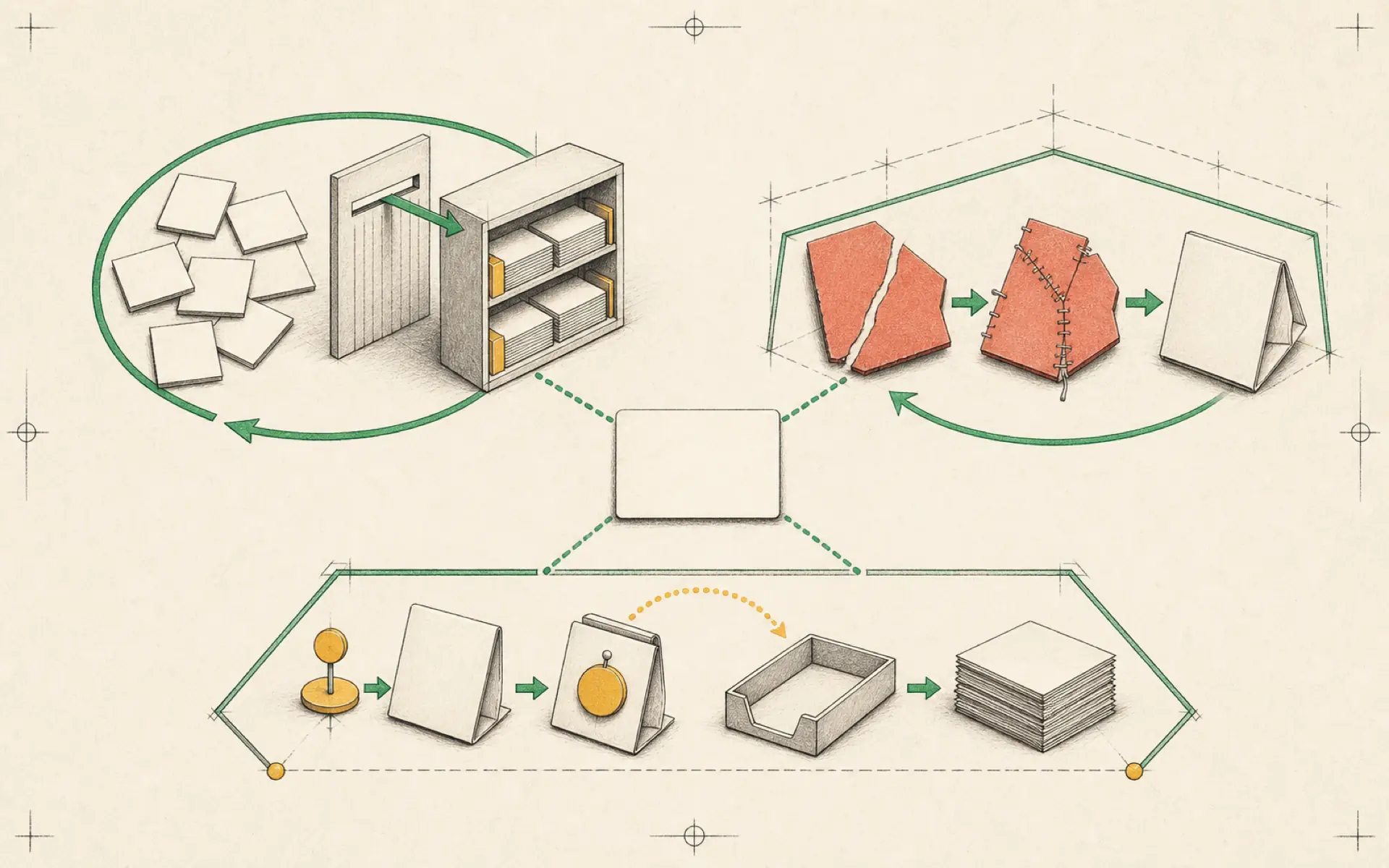
Hermes can recognize that a multi-step procedure is likely to be repeated and capture it as a skill. For example, an assistant managing Home Assistant and UniFi systems might learn the correct sequence for checking device status, interpreting a common failure, and producing a dashboard report.
The skill is not magic. It is stored knowledge that can be read, edited, versioned, and tested. This visibility matters. A user can inspect what the agent believes the procedure to be and correct it before the procedure is automated.
A useful self-improvement loop looks like this:
- The agent attempts a real task.
- The user verifies the result.
- The successful method is recorded as a skill.
- The skill is tested on a similar task.
- Errors and edge cases are added to the instructions.
Over time, the system develops a library of procedures tailored to its environment.
A curator prevents uncontrolled growth
Self-improvement can create clutter if every small action becomes a separate skill. A curator role helps decide whether new knowledge belongs in an existing skill, a memory note, or nowhere at all.
The curator can review candidate skills, merge duplicates, add missing safety checks, and keep the collection searchable. Human review remains essential for skills that touch infrastructure, money, accounts, or public communication.
This is an important contrast with systems that accumulate a single oversized personality file. A growing blob of mixed preferences, procedures, and history is difficult to audit. Separating identity, memory, and skills keeps each type of information manageable.
Real value appears when tools are connected
An agent becomes useful when it can observe and act within the user’s environment. A homelab operator may connect Home Assistant, UniFi, system dashboards, and remote-access tools. Hermes can then gather device health, investigate an alert, and prepare a report.
Permissions should expand gradually. Begin with read-only access and allow the agent to explain what it would change. Once the recommendations are consistently correct, a small set of reversible actions may be enabled. Network changes, account management, and destructive operations should continue to require explicit approval.
The same principle applies to computer use. Visual browser or desktop control is powerful but brittle. It should be monitored, bounded, and supported by clear stopping conditions.
Stability is a feature
An agent platform that frequently breaks its configuration imposes hidden costs. Each update consumes time, and every repair risks damaging memory or scheduled work. Hermes is attractive when its core structure remains understandable and its files can be backed up.
Stability does not mean updates should be ignored. It means updates are applied deliberately, with backups and a way to roll back. Skills and identity files should live in version control when possible, while secrets remain outside the repository.
Dashboards make invisible work visible
Kanban boards and dashboards can expose what the agent is doing. A task should have a clear state: planned, running, waiting for approval, completed, or failed. This visibility is especially important for background jobs and subagents.
Without a control surface, automation becomes a collection of invisible processes. The user notices it only when an output is missing or a bill is unexpectedly high. A dashboard turns agent activity into something that can be reviewed and managed.
The case for Hermes
Hermes is compelling not because it eliminates all maintenance, but because its main components are understandable: identity, memory, skills, tools, gateways, and schedules. Each can be inspected and improved.
The strongest reason to adopt it is the possibility of compounding value. A successful task can become a skill. A repeated preference can become memory. A manual check can become a safe schedule. When those improvements are curated and backed up, the assistant becomes more useful without becoming more mysterious.
Hands-on lab: Capture one proven workflow with /learn
- Outcome: Convert a procedure you just completed into a visible skill, inspect it, and test it on a second input.
- Time: 15–25 minutes.
- Risk: Low to medium.
/learnwrites a skill into the active Hermes profile; the learned procedure may be unsafe if the source workflow was unsafe.
Before you start
- Complete one small, successful, reversible task in the current session.
- Keep evidence of what succeeded and what required correction.
- Do not use a workflow involving credentials, payments, deletion, public posting, or production infrastructure.
Build it
Immediately after the successful task, ask Hermes to capture only that observed method:
/learn how I just completed this task. Preserve the verified inputs, checks,
output format, stopping condition, and failures we corrected. Do not invent
commands or credentials. Keep the new skill manual-only; do not schedule it.
Start a new session, find the generated skill, read it before using it, and invoke it on a similar but different input:
hermes skills list
hermes chat -q "/NEW_SKILL_NAME Apply the learned method to SECOND_TEST_INPUT. Stop before any external change."
Replace NEW_SKILL_NAME and SECOND_TEST_INPUT with the name Hermes created and a bounded test case.
Verify it
- The new skill appears in
hermes skills list. - Its procedure reflects the successful workflow rather than the entire conversation.
- It includes verification and stopping conditions.
- The second test produces the expected format without broadening permissions or inventing steps.
If it fails
- If no skill is written, check whether skill-write approval was denied and repeat only after reviewing the proposed change.
- If the new skill is missing from the current session, start a new session so the skills index refreshes.
- If the procedure contains an unverified command or secret, do not run it; edit or remove that content before retesting.
- If the second case fails, record the exact failure and update the skill rather than creating a duplicate.
Safety, privacy, and cost
/learn can preserve details from the current conversation, so review the resulting SKILL.md for private data before reuse. Keep human approval for every write and external action. Learning and retesting consume model calls; one verified, reusable skill is cheaper and safer than repeatedly generating near-duplicate skills from every small task.
Official references
Source video: you need to use Hermes RIGHT NOW!! (goodbye OpenClaw!!), NetworkChuck. Adapted and reorganized from the full transcript; sponsorship and channel promotion were removed.